What Capitalism and Socialism Actually Mean
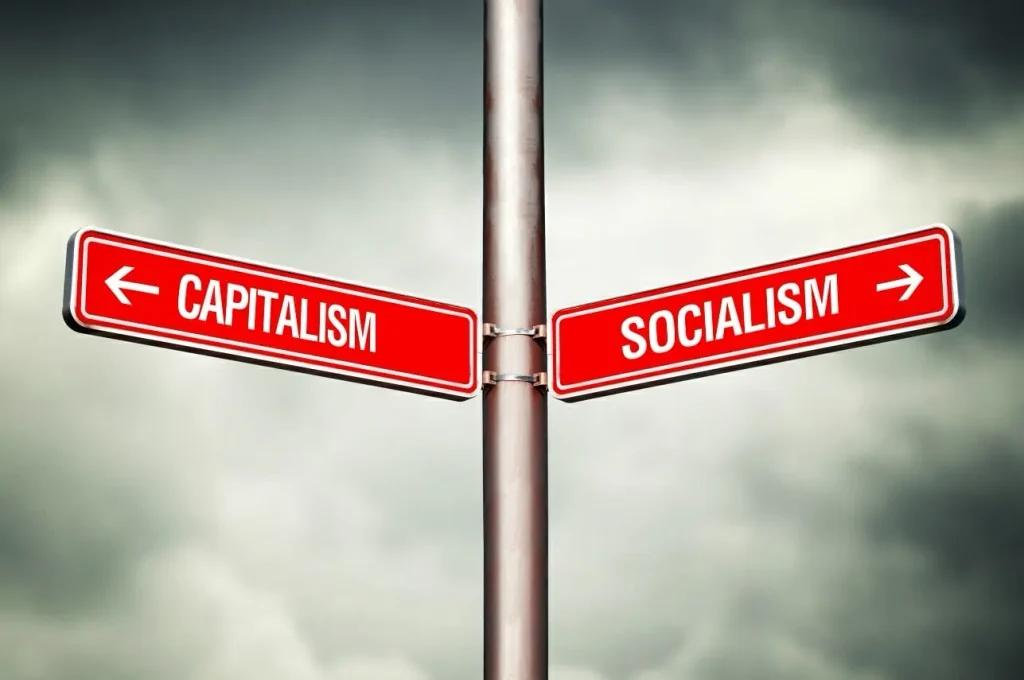
At the simplest level, the difference comes down to one question: who owns and controls the things that produce wealth, like factories, land, and companies? Capitalism says mostly private individuals and businesses, while socialism says mostly society as a whole, through the state, co-ops, or workers.
Everything else, from prices to wages to healthcare, flows from that starting point.
Capitalism, Defined
Capitalism is a system where private owners run businesses for profit, and prices are set mainly by supply and demand in open markets. If you’ve ever picked one phone over another because it was cheaper or better, you’ve seen a market doing its job.
Socialism, Defined
Socialism is a system where the means of production are owned collectively, with the goal of sharing wealth more equally and meeting needs before profits. Depending on who you ask, that ownership can run through a central government, local cooperatives, or worker-run firms.
Where Communism Fits In
Communism often gets lumped in with socialism, but in Marxist theory it’s the end stage: a classless, stateless society where property is held in common. Real regimes that called themselves communist, like the Soviet Union, ran state-controlled economies that looked very different from that ideal.
What a Mixed Economy Is
Almost every country you can name today runs a mixed economy, combining private markets with public services like roads, schools, and pensions. So the real-world question is less “which one” and more “how much of each.”